Family is God s Greatest Masterpiece Key
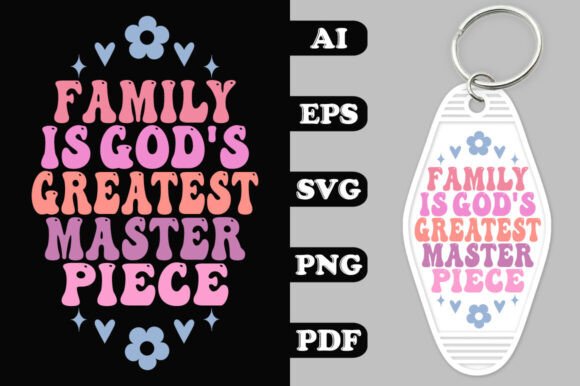
As a designer who spends half my life in the hoop and the other half trying to sell what comes out of it, I have learned to look past the pretty preview image. When I first pulled up Family is God s Greatest Masterpiece Key, my initial reaction was one of cautious optimism. The concept is undeniably strong for the current market, blending religious sentiment with a nostalgic, retro aesthetic that has been dominating craft fairs and Etsy listings for the last few years. But does it translate well from a digital vector into a tangible, stitched product? That is the question that matters when you are deciding whether to add this to your library or leave it on the shelf.
The visual personality of this design leans heavily into the "Retro Hotel" vibe mentioned in its tags. It feels like something you might find on a vintage luggage tag or an old motel sign. This gives it a distinct character that separates it from the generic script fonts we see everywhere. For a small business owner or an Etsy seller, that differentiation is crucial. Customers are scrolling through thousands of similar items; a design that evokes a specific era or mood stands a much better chance of catching the eye. However, the challenge lies in execution. The keychain shape combined with the text requires precise placement to ensure the message isn't lost in the stitching.
Real-World Application: From Screen to Stitch
I recently considered using this design for a custom order—a personalized gift for a client who runs a boutique church group. They wanted something subtle but meaningful for their holiday party favors. My first thought was a high-quality cotton tote bag. The retro theme pairs beautifully with natural fabrics, canvas, or even a muted olive green twill. In this scenario, the machine embroidery design would serve as the focal point on the front pocket or centered on the back.
However, after reviewing the layout, I realized that a standard tote might be too large a canvas for the detail level. The design works best when it feels intimate. I shifted my focus to a sweatshirt or a heavy-weight hoodie. Embroidering this onto the chest area of a cream or heather grey hoodie creates a cozy, approachable look. It fits perfectly into the category of personalized gift items that people buy for themselves or loved ones during the holidays. The retro keychain motif adds a touch of whimsy that prevents the religious message from feeling too heavy or formal.
Another practical use case I explored was baby apparel. A onesie or a burp cloth with this design could be a hit for baby showers. The phrase "Family is God s Greatest Masterpiece" resonates deeply with new parents. In this context, the embroidery file needs to be scaled down appropriately. You want the text to remain legible without overwhelming the small garment. The keychain graphic acts as a charming anchor, drawing the eye to the center of the chest. It transforms a basic piece of clothing into a keepsake.
Technical Considerations and Fabric Choices
Not every surface is created equal, and understanding where this design should be used carefully is vital for maintaining professional quality. I would advise against attempting this on highly textured fabrics like bouclé or thick terry cloth unless you are using a heavy stabilizer and perhaps an appliqué base. The fine details of the retro keychain shape can get swallowed by the fabric pile, resulting in a muddy finish that loses the crispness of the original vector.
Stretchy fabrics present another hurdle. If you plan to put this on a cap or a fitted hat, you need to be mindful of distortion. Caps require careful hooping and often benefit from a tear-away stabilizer to keep the tension even. Without proper support, the satin stitches outlining the keychain could pucker, ruining the clean lines that make the design appealing. Similarly, thin fabrics like silk or lightweight rayon are risky. The density of the fill stitch required for the solid parts of the keychain might show through to the reverse side, which can be uncomfortable for the wearer.
Color contrast is perhaps the most critical factor. The retro aesthetic usually relies on bold, contrasting colors—think mustard yellow on navy blue, or white on black. If you are working with dark fabric, you must ensure your thread selection provides enough pop. A low-contrast thread choice will make the design look dull and tired. I always recommend testing your thread colors on scrap fabric before committing to the final product. This simple step can save you from having to unpick dozens of stitches later.
Stitch Quality and Visual Appeal
When evaluating the technical execution, I look at how the different stitch types interact. The design likely utilizes a combination of satin stitch for outlines and borders, fill stitch for solid areas, and possibly running stitch for finer details or texture within the keychain graphic. The balance between these elements determines the overall durability and look of the finished product.
If the stitch density is too high, the fabric can become stiff and unyielding, especially on garments like aprons or kitchen towels that need to remain soft and functional. Conversely, if the density is too low, the backing material might show through, giving the embroidery a cheap appearance. For a handmade product intended for sale, consistency is key. Every item leaving your shop should look identical in terms of stitch quality and tension.
The visual appeal also extends to how the design ages. Retro designs have a timeless quality, but they must be executed cleanly. Pilling threads or loose ends can detract from the nostalgic charm. Using high-quality polyester or rayon threads not only enhances the sheen and color vibrancy but also ensures the design withstands frequent washing. This is particularly important for custom apparel and home decor items like pillow covers or tea towels, which will see regular use.
Practical Designer Notes for Success
- Test on Scrap: Always run the design on a piece of the same fabric type and weight you intend to use. This reveals issues with puckering, tension, or stability that aren't visible in software previews.
- Check Hoop Size: Ensure the design dimensions fit comfortably within your machine's hoop limits. If the design is larger than your hoop, you may need to rehoop, which can affect alignment and precision.
- Review Details: Zoom in on the digital file to inspect small corners and lettering. Tiny details can sometimes break apart during stitching if the file isn't optimized correctly.
- Mockup Testing: Create black and white mockups to evaluate contrast and composition. This helps you visualize how the design will look regardless of color choices.
- Stabilizer Selection: Choose the right stabilizer for your fabric. Cut-away stabilizers are generally safer for stretchy or delicate fabrics, while tear-away works well for stable woven materials.
- Licensing Check: Before selling any finished products, confirm the licensing terms of the digital embroidery file. Some licenses allow personal use only, while others permit commercial sales. Understanding these distinctions protects your craft business from legal issues.
In conclusion, Family is God s Greatest Masterpiece Key is a versatile and emotionally resonant design that can elevate a variety of handmade products. Its retro charm and meaningful message make it suitable for everything from holiday embroidery gifts to everyday commercial embroidery projects. By paying attention to fabric choice, stitch quality, and proper testing, you can ensure that this design delivers the professional finish your customers expect. Whether you are creating a single personalized gift or stocking shelves for your Etsy seller shop, this design has the potential to be a standout piece in your collection.