A Sass a Day Keeps the Basics Away Key C
As an embroidery designer who has spent years digitizing files and testing stitches on everything from delicate muslin to heavy canvas, I approach every new design asset with a mix of excitement and skepticism. We all know that a pretty SVG can look great on a screen but fall apart under the needle. That is why I took A Sass a Day Keeps the Basics Away Key C for a spin. This isn't just another generic quote file; it carries a specific personality that demands careful consideration before it hits your hoop.
First Impressions: Personality Meets Practicality
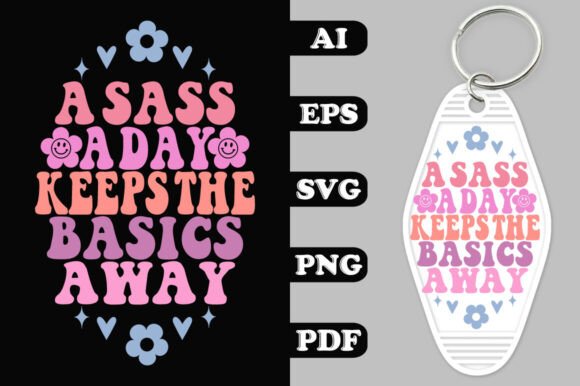
The moment you load this design into your digitizing software, the visual weight of the piece becomes apparent. The phrase "A Sass A Day Keeps The Basics Away" is inherently playful, leaning heavily into the retro aesthetic often associated with motel signs and vintage hotel keychains. This isn't a minimalist, clean-line design. It is bold, slightly chaotic, and undeniably loud in the best way possible. For designers looking to add a touch of humor and nostalgia to their inventory, this graphic offers a strong foundation.
The layout mimics the classic shape of a hotel keychain tag, complete with the iconic "Key C" element at the bottom. This structural choice is smart because it gives the eye a clear focal point. However, the challenge lies in the lettering. Sarcastic, hand-drawn style fonts often suffer from poor legibility when stitched, especially if the stitch density is too high or the thread colors clash. In this case, the design relies on contrast to make the message pop. If you are planning to use this for custom apparel or personalized gifts, you need to ensure the typography remains readable after stitching.
Real-World Application: Where This Design Shines
I have tested various designs in real-world scenarios, and A Sass a Day Keeps the Basics Away Key C finds its natural home in the realm of casual, lifestyle-oriented products. It feels perfectly suited for a tote bag design intended for a day at the beach or a trip to the local coffee shop. The retro vibe pairs exceptionally well with sturdy cotton canvas or denim, materials that can handle the slight bulk of a detailed fill stitch without distorting.
Another excellent application is sweatshirt embroidery. Imagine this design centered on the chest of a heather grey crewneck, stitched in contrasting white or cream thread. The nostalgic theme resonates with the current trend of comfort wear mixed with witty commentary. It also works wonderfully as a standalone embroidered patch that can be ironed or sewn onto backpacks, jean jackets, or even baseball caps. The keychain shape provides a contained boundary, which helps in managing the overall footprint of the design within standard hoop sizes.
For Etsy sellers and small shop owners, this design offers versatility. It can be adapted for holiday embroidery projects, serving as a quirky gift for friends who appreciate dry humor. It also fits seamlessly into baby embroidery collections if paired with softer color palettes, though the sarcastic tone might be better reserved for adult merchandise. The design’s ability to function as both a statement piece and a subtle accent makes it a valuable asset in your design assets library.
Technical Considerations and Potential Pitfalls
No design is without its challenges, and understanding where A Sass a Day Keeps the Basics Away Key C might struggle is crucial for maintaining professional quality. One area to watch closely is the stitch density. Retro-style graphics often include decorative elements like borders, stars, or textured backgrounds that can increase the stitch count significantly. If your machine struggles with high-density areas, you may experience puckering, especially on thinner fabrics.
Fabric selection is equally important. While this design looks fantastic on stable woven fabrics, it may not perform well on stretchy fabric or highly textured materials like bouclé or heavy fleece. On stretchy knits, the tension required to keep the satin stitches smooth can cause the fabric to pucker or distort. Similarly, on dark fabrics, the choice of thread colors becomes critical. Light threads on dark backgrounds offer the best contrast, but you must ensure the underlay stitches are sufficient to prevent the top thread from showing through the base fabric.
Another potential issue arises with small details. If the original vector includes tiny text or intricate line work, these elements may become muddy or disappear entirely during the digitizing process. Always inspect the small details in your software before committing to production. If the design includes layered garments or curved surfaces like the front panel of a cap, you may need to adjust the hooping technique or use specialized stabilizers to maintain alignment.
Practical Designer Notes for Best Results
- Test on Scrap Fabric: Before running a full production batch, always test the design on the exact fabric you plan to use. This helps you gauge how the fabric texture interacts with the stitches.
- Check Thread Contrast: Use black and white mockups to verify that the design remains distinct regardless of color choices. High contrast ensures better visibility and customer satisfaction.
- Review Stitch Density: Ensure the stitch density is appropriate for the fabric weight. Too dense, and you risk damaging the material; too sparse, and the design may look thin and unfinished.
- Confirm Hoop Size: Verify that the design fits comfortably within your standard hoop size constraints. If the design is large, consider splitting it across multiple hoops or adjusting the scale.
- Inspect Small Details: Zoom in on the lettering and decorative accents. If any elements are too fine, they may require simplification or removal to ensure clarity.
- Use Proper Stabilizer: Choose a stabilizer that matches the fabric type. Cut-away stabilizers are generally recommended for woven fabrics, while tear-away may suffice for temporary applications.
- Licensing Check: Before selling finished items or using this as a digital embroidery file in commercial projects, confirm the licensing terms. Ensure you have the right to produce and sell products featuring this design.
Final Verdict: A Strong Contender for Quirky Merchandise
A Sass a Day Keeps the Basics Away Key C is more than just a novelty item; it is a well-structured design that leverages nostalgia and humor effectively. For designers who specialize in handmade product lines that cater to a younger, trend-conscious audience, this file offers a unique opportunity to stand out. Its retro hotel keychain aesthetic is timeless yet fresh, making it suitable for a wide range of applications from aprons to pillow covers.
However, success with this design depends on technical execution. By paying attention to fabric choice, thread contrast, and stitch density, you can avoid common pitfalls and create a finished product that looks professional and polished. Whether you are an experienced embroiderer or a beginner looking to expand your catalog, this design is worth adding to your collection—provided you approach it with the care and attention it deserves.
In the world of craft business and commercial embroidery, having a diverse range of styles is essential. This design fills a specific niche that blends sarcasm with vintage charm. When used correctly, it can enhance brand consistency and drive buyer engagement. So, load up your machine, select your threads, and let this design bring a little bit of sass to your next project.